Thursday, 11 October 2012

Individual Narrative

My Own Idea For a Narrative

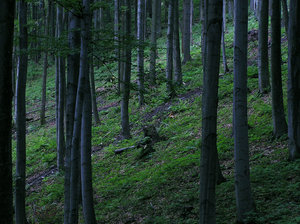
Film openings are vitally important as it sets the scene for the whole of the film.  My narrative would begin in a dark forest in the early evening a woman would be seen running towards the camera frantically, her clothes would be ripped and she would look dirty and tear stains and blood would be visible on her face. 2 gun shots would be heard in the background of the forest and the woman's reaction would be to run faster and shriek loudly. She would then start to slow down so she was creeping around a tree trying not to be seen or heard, (this would fit the conventions of a thriller as it would create suspense and foreboding) she would look lost and helpless then suddenly as she steps out from behind the tree a mans gloved hand closes over he mouth she screams and struggles and the man whispers words to her suddenly she passes out and is dragged through the forest.

The sort of forest i would like my film
to be set in. Over powering trees, eerie feel.
The rest of the film feature would include the story on the mans phycological ways and the woman's story on how she ended up a prisoner. There would be a dark cabin featured in the film that would have low key lighting to hide his identity and make the scenes seem more dark grimy and mysterious. I would use high key lighting for flash backs and memories that would play-out through-out the film as the audience is informed of the story. The enigma of the film would me the mystery of the woman's stalker keeping her captive and if/how will she get out.

Film Inspiration.

Many micro elements from various thriller films have inspired me, but 2 in particular stand out and relate to the opening sequence of my planned thriller. Inglorious basterds, the scene in which the young jewish girl has ran out of hiding with her family members from the nazis. she is covered in blood and is being shot at. her family have all died and she is running frantically for her life.

Although this is not the best quality clip, you can see how far the camera pans in on the girl, when you first see her if you hadn't seen the rest of the film you wouldn't know why the woman is running, then as you zoom in you can clearly seen her pain and anguish she is feeling. This creates great empathy from the audience and builds suspense, this being the sort of film i would like my audience to get from the thriller film.

Another big inspiration to me is the scene in trapped. in particular, the scene where the girl is being taken away by intruders. This scene to be is great as it displays raw emotion and cleverly expresses her anger, frustration and pure terror as the men take this woman away. I could even include maybe a phone call or some sort of non diegetic sound to be played over the scene when the woman is being taken away.


 The phone scene in this film is the sort of non diegetic sound id like to include. It features amazingly effective techniques, such a a 6 second build up before the man who has captured his daughter speaks. Although he says just 2 words 'good luck' the amount of tension and horror felt my the audience is vast.  This grabs the audiences attention and feels for the man on the phone and wants him to get his daughter back to safety. This idea in my own thriller film towards the end of the sequence would grab the audiences attention and make them want to continue watching. it leaves the scene on a cliff hanger and the audience on the edge of there seats, would not be able to turn away.

Low key lighting in my opening scene will be convent characarisation ional of a thriller film, and the grimy iconography used and weapons in the background will make the audience feel scared which will set the scene for the rest of the film. Following Aristotle's theory of the audience will feel empathy for the young girl trapped and be instantly scared of the dark sick minded villain who is planning to kill her.

The stronger the relationship with the character will give the film more impact on the audience, foreboding will make the audience edgy and expecting the unexpected. This will make my thriller film more successful.
Friday, 5 October 2012

What is a Thriller Film

Main Codes And Conventions Of A Thriller Film


The main codes and conventions of a thriller film are are as follows. An enigma is a feature of all thriller films and is basically a mystery. An example of this could be who is the killer in the film?
and the audience continues watching to find out the mysteries set up in the film. Music and sounds is also a convention, this includes natural sounds such as breathing and water. Non natural sounds the sounds of guns knifes and screaming. Some of these sounds could be both non diegetic and diegetic.
Iconography is also a key convention. This means the props used such as knifes chains and any time of weapon. Lighting both low key and high key is used, low key lighting can be used for audience manipulation as when the scene is pitch black and the killers non diegetic sound can be heard the audience is in suspense and cannot tell what is going on. High key lightening can be used to show a happy scene or a fond memory, the scene is very visible with no shadows present. Sometimes this is used in the opposite way such as in the 'saw 1' scene when both victims find themselves in blinding light this is not a happy scene and can also create dramatic irony as the audience could know the where abouts of a killer where as the victims in the scene wouldn't know. Good v's Evil is a common convention also as the killer is in the wrong and trying to kill the innocent for example a young innocent woman. Setting and narrative of a thriller is usually a dark unknown location in which the characters are not familiar with. audience manipulation is another key mentioned earlier, this also includes evil child sadistic killers and mirrors that show evil. this goes against reality and mucks up the audiences head. Escapism is a strong convention as-well as in the narrative the characters are trying to escape from there own killer. The 3 S's are used alot in horror films. These are shock, surprise and suspense. All good thrillers use this and impresses audiences and keep them on the edge of there seat in suspense and terror.


The opening sequence defines thriller as a genre because of the enigma that is present of a mystery and the non digetic sounds that are being heard from the pitch black darkness. Low key lightning is suddenly killed by high key lighting to reveal a rank and gloomy abandoned bathroom. Sound effects include the natural sounds of water used in a eerie effect that then fade to frightening man-made sounds of chains and gun. Fitting with the thriller conventions, saw 1 has a strong sense of escapism and effects such as slow editing to highlight a victims blood and gun draw in an audience and build suspense.
However interestingly some conventions of a thriller are not being followed, such as the classic weak female victim who is not present in this opening. Usually high key lighting in a thriller is used for a happy scene or memory but quite the opposite in this film, high key lightening is used to blind the victims and show how gloomy and awful the room there being held in is.

Micro editing techniques are also featured. this includes the spinning camera edit effect which helps create confusing and empathy between the audience and the victim and install the enigma by how horrific the victim has been murdered, and why hes there. further conventions have also been followed as the killer is no where to be scene and the whole plot and setting seems alien and weird for the characters to be in.

This opening has inspired me in my own thriller film, as it shows how simple effects can go along side what your trying to make the audience feel and if they can relate to the situation the victim is in. The cold thrilling opening builds tension and suspense for the audience, something I hope to achieve with my own thriller opening.


The opening sequence is disturbing and horrific. Conventions of a thriller film are cleverly used, to maximize the suspense and draw in an audience in a subtle yet effective way. The clip shows a man performing various distasteful tasks that show the characters psychopathic nature. Slow editing is used with natural non digentic sounds playing throughout that build up and get louder to co inside with the tension and suspense building from the audience. The camera shots are zoomed right in onto the objects and low key creepy lighting highlights the items and hands of the man to be dirty and disgusting  This shocks an audience and makes them wonder what is happening on screen and what the plot could be, furthermore the enigma convention of mystery is being shown as the audience have no idea what is going on and why. Shots from the camera seem flickery and historical making it seem old, dated and forbidden like as an audience were not allowed to see this abandoned clip. The flashing shots make the audience feel a sense of foreboding and as the camera jumps so does the audience. Over all the film opening entices an audience with great effect and creates a creepy and disturbing opening to a film that an audience would be compelled to watch.

The target audience of thriller films ranges from young teenagers to young adults. Typically these people find thriller films most entertaining as they enjoy the suspense and being scared by the jumpy scenes. Therefore its important for thrillers to have the right conventions and age certificate in order for all age groups the film aimed at to be able to watch the film.

In my own thriller film I would like to have an enigmatic opening which will leave the mystery unawnsered so my target audience is hooked into the plot of the film. I will make sure that I use questionnaires to determine what the general public enjoy in there thriller films, so I can make it specific for that audience.
I will use the above conventions such as micro editing to make my film jumpy so my audience isn't bored. Also non diegetic sounds will build tension throughout my opening scene then the iconography I use will have to be grimy and disgusting so my audience is taken aback and gets a sense of foreboding.


Thursday, 4 October 2012

Age Classification


A G E  C E R T I F I C A T E S

The BBFC stands for 'British Board of Film classification'.
this organisation is responsible for national film censorship in the UK.
This is important for the film industry as age certificates determine if the film is suitable for the right audience so younger audiences aren't exposed to material not designed for there age group.

The different age certificates are as follows:

  • Universal - suitible for all
  • PG - parental guidance required if person is under 12
  • 12A - If the person is under 12 must be accompanied by someone over 12
  • 12 - must be over 12 to veiw
  • 15 - must be over 15 to veiw
  • 18 - must be over 18 to view
  • Restricted 18 - only sold in licensed adult cinema or sex shop.

Most Disney films are 'U' films, This is because there is little violence and noting unsuitable for children.
Example of a 'U' Disney film


Example of a 'PG'


PG films require children to watch this film with an adult as some scenes may be unsuitable for children and feature mild language or fantasy violence. 


The Hunger Games Is a 12A
The 12A film category was created in 2002 because of a spiderman film, this was because violence was too explicit and would have had to have been a 15 but because spiderman is based on a comic, universal studios decided to make the 12A category meaning younger children could view this film as-long as they were with someone over 12. Hunger games is a 12A because although the mild violence might scare a very young audience some under 12s, may be interested in the book and plot of this film so would be able to view this film as-long as they were with someone over 12 to be responsible incase they get scared.
Mean Girls is Rated 12

To view a 12 film the person must be over 12 to view if as some language and drug references may be used as well as mild violence that's unsuitable for a younger audience. Mean girls is rated 12 because a younger audience wouldn't understand certain things, and also alcohol, mild violence and some mild language is used in the film there fore 12 + is the correct age group to view this film.


The inbetweeners movie '15'

The 15 certificate is for people over 15, this is because films under this category can contain adult themes, hard drugs, frequent strong language. and some sex references. This is limited however unless the film is an 18 certificate. This category has no limits on the amount of language used sex references and drugs may be featured frequently  Restricted 18 applies to pornographic films that are ever rented or shown in adult licensed cinemas. This certificate of film happens to be the most used of all the classifications. The inbetweeners movie is a 15 because although there are strong sexual references and language, most teenagers would have watched the film so in order for the film to be a success in the cinemas.
Trainspotting is an 18

For my thriller film I would choose the certificate 15, this keeps open the possibilities to make the opening violent and thrill an audience but does not limit the amount of people who can view it too much. Trainspotting is not for the faint hearted so contain alot of sex and drug use. This film has to be an 18 and an older teenage audience would be their target.


Monday, 1 October 2012

Mise-En-Scene of Prom Night

Mise-en-scene means everything in the scene. This is a french term and used to define everything going on on set this includes the five elements:
settings and iconography (location and set and props), costume, hair and makeup which shows an indication of character and time frame. Facial expressions and body language, lighting and colour and also positioning of characters and objects.

In prom night varies techniques of mise-en-scene was used. The setting for the scene we studied was in a ball room, this gave the impression of a calm relaxed and enjoyable environment. The audience would not expect danger or chaos, this gives the audience a false impression as the plot unfolds. 

Iconography in this clip was varied and created allot of emotional impact on the characters. The results sheet stating who was going to be crowned prom king and queen was about to be opened when the alarm went off, and everyone was desperate and anxious to know who would be king and queen one girl even grabs the envelope and when she finds she isn't the winner breaks down in tears. This shows how simple iconography can dictate how characters feel and shows there personality to the audience as being shallow. on the opposite end of the scale, a knife was also used by a man threatening a young woman in the hotel room scene, this knife caused terror and instanlty made the man a threat in the audiences eyes and became more powerful and a key character in the scene.

Costumes used in this scene were very formal. Prom suits were largely worn and again in prom suits and dresses do not go with action and panic so suprise the audience. The girl in the scene is fighting for her life and still wearing her prom dress! this shows the suprise of the attack and the spontaneous way in which the plot is unfolding.

The positioning of the characters was very varied in parts of the clip. Panic spread the characters out and compacted many during the scene where the teenagers were asked to leave the hotel. Also the woman trapped in the hotel room was featured on many different levels including the floor and behind the door. This makes the woman seem weak and fearful as she is hiding from the killer in a cat-and-mouse chase style.

The lighting in this clip is low key and serious.  shadows and light vary particularly in the fight scene where the conventions of a thriller film are followed by dark moody lighting that shows mystery and fear. Flashing white is also a feature when the killer arrives this makes the audience feel like theres going to danger and to be scared of the murderer. It also hides his identity and creates more mystery as to who and what the killer is and his motives, how ever the face is then revealed which is unconventual to a thriller film.


The facial expressions at the being show shock and grief as not only has prom been postponed but friends of the characters are missing. This fits in with the conventions of a thriller and makes the audience feel tense and interested as to what will happen next. Make up and hair is a key feature at the start of the film as all the girls are dressed up for prom, but by the end of the clip the girl in the bedroom is seen with mascara running down her face as she is crying. This shows how prom has been ruined and that she doesn't care for her appearance now her life is at stake.

To conclude mise-en-scene includes many factors of the film and is allot to take in. It also varies greatly throughout this clip and is allot to take in and review. 

The target audience of the film would probably be 14-20 year olds. This is because this age group can relate to the plot and also be more enticed and interesting in whats going on. The film is jumpy and thrilling but also not to horrific or scary so can appeal to a wide audience who may like different genres of films.
The Female weak characters promotes sympathy from the audience and they feel scared and worried about her. Also she is very pretty and so the audience (particularly some males) may feel they want to protect her. This gives a strong character audience relationship and makes the films impact more effective. This is a typical convention of a thriller film.


Thursday, 27 September 2012

Cinematography And Camera Angles Of ‘The Haunting in Connecticut”


Cinematography And Camera Angles Of  ‘The Haunting in Connecticut”

Camera angles vary greatly over the coarse of any film and are designed to make the most of a plot and to draw in the audience with great effect. They set the mood and atmosphere of the scene and add extra detail to an already developing plot. This is particularly important in thriller films as cinematography can demystify plot twist and help make the audience understand what’s going on and which objects ect. are vital to the film.

In the film clip I analysed I noticed many cinematography techniques but 3 stood out in particular:

Low Angle
When the character was searching for the box the camera was positioned below the object this made the object look bigger and the man look smaller. This realistically is not the case, by it highlights for the audience how important this mysterious box is and the frantic expression we see on the man’s face is highlighted with his hand movements as they fumble around trying to search for the box.
This camera angle also makes the audience feel empathy for the man as we can clearly see the detail of the box as the camera is zoomed right in, and for the man not to grab it perceives him to us as helpless, vulnerable and desperate as he can not complete the simple task of picking up a box.
Low angles give the audience a sense of foreboding and it makes tension build so they think something is going to happen.

Zooming In:
I noticed this camera shot at a clear moment in the clip, without the zooming in technique this scene wouldn’t have made much sense. Its used when the young man is suddenly covered with cuts from a supernatural source. The camera zooms in and out rapidly making it clear to the audience that cuts have suddenly appeared all over the mans body, this creates fear as the cuts suddenly appear in gruesome detail. Without the zooming in cinematography technique we would not be able to see the cuts in such a horrific way, which is obviously the aim of any thriller film to shock and scare the audience. Zooming in can also focus on emotion and show characteristics. This lets the audience get closer to the characters and feel better connected to them.

Point Of View:
This angle was the hardest of the 3 to spot and took a lot of time to put in the right category. Towards the end of the séance scene, the camera flashes back in time; this is shown to the audience by the sudden change of colours to a darker sinister sepia colour. The camera angle is situated so the audience feels like a member of the circle witnessing the event. This engages the audience more and makes them feel like an eyewitness. The camera then becomes shakier showing some handheld qualities, as a young boy is suddenly possessed. This is shocking to the audience as we can clearly see the members of the family distressed and the cameras cinematography makes the audience feels like a member of the family.

The zooms in this clip are detailed as the camera position highlights how this demon is effecting the boy in making him have a fit and shake we are left in suspense as the boy just lays there and the camera once again switches to modern day. This transition is made smooth and clear by the camera and the audience can tell exactly what’s going on.
This gave me ideas on how i would like to put my own techniques into my thriller film. I think zooming in is a key point. Its simple but can focus an entire audience onto one point and also reveal vital characteristics of a chosen character.


Sound


  Analysis of Sound In ‘The Strangers’

Sound In any thriller film is a key part in exploiting peoples emotions and reactions by playing scary and tension building music. In this clip the music was particularly important as the audience is hooked by the climax of the film, and wondering what the outcome will be.

In my clip the first sound heard is a non-diegetic sound, meaning a sound that is not part of the film world. The purpose of this sound is to establish the scene as dramatic and tense, this creates a mysterious feel to the scene and creates an atmosphere in which the audience knows something bad is going to happen and puts them on the edge of there seats. The music soundtrack played is slow and dramatic which is gradually building up, it almost sounds like the female characters breathing, which is speeding up as the music does. This makes the audience feel adrenaline and gripped by what is going to happen when this sound reaches its climax. This is a typical convention of a thriller film and is commonly used to set scenes and get the audience interested and enticed by with what’s going on.


The next Sound heard was a diegetic sound this is played at the climax of the scene later on after the non-diegetic soundtrack played to entice the audience. Gradually the tension in the scene has been building up and up then suddenly a blood-curdling scream that kills the non-diegetic build up of sound. This shocks and scares the audience as they have been in suspense for so long now the quiet music has without warning been replaced with a human scream. This causes the audience to jump as the scene unfolds fully and we know exactly what’s going on, this is a classic convention of a thriller film, and is both scary and effective for any audience watching.

The non digentic sound features all through the clip and manipulates the audience to feel anxious and intrigued. the parallel sounds help build bonds with the characters in the film and make us wonder where and what the killer is about to do thus fitting in with enigma of the scene.

Parallel sound is also featured in this clip, when the non diegetic sounds cease the killer comes at the woman with a knife, at the same time as this the music begins to play louder and faster as the woman is unsure whether she will be killed or not. This conventional device is used to inform the audience how to feel almost, and translate what is happening to the viewer. The woman looks scared and frustrated with what is going on and the killer cold and indifferent to her sobs and distress, this makes the audience feel for the woman screaming and this technique manipulates the audiences emotions which is a classic convention of thriller films. The emotions from this technique are fear and empathy for the victims. The technique used gives a bigger impact on the audience and makes them jump, this follows the conventions of a thriller film as the thrill given off makes any audience jump and cower from the scream in fear.

The final sound I analysed was right near the very end and was harder to categorise. The woman at this point is desperate and in need of medical care the phone rings and is her only chance to get help that will save her life. This sound is an on screen sound because we know where it is coming from. In some ways it makes the audience feel empathy for the girl as we just want her to answer the phone and get help. The sound is also a diegetic sound as the ringing of the phone is what’s expected. This is a final tension builder to the audience, which is more subtly building adrenaline and apprehension as to what will happen next. This is fitting for a thriller film as this convention is used at all points of the film to constantly grab our attention then scare us then grab our attention once more.

The hidden meaning behind non diegetic sound is custom made to manipulate the audiences thoughts, feelings and ultimately there response. Slow eerie music would build tension and make the audience have a sense of foreboding. This gives the impression that something bad is going to happen and that the audience should be feeling scared and cautious of the mise- en-scene.
In this scene the iconography's diegetic sound gives a more real fear of what is going to happen. The audience feel more scared because there is a lot more tension and the event of a death is so close it keeps the viewer on the very edge of there seats.

In conclusion, the Sound in this clip built tension and illustrated with graphic realism, the twisted ways in which the killers were inflicting pain on there victims. The sound of the victim’s screams and the stranger’s gunshots give a great yet horrific insight on what is going on and what will happen. The sound makes the audience feel empathy for the victims and as if they’re really in the scene watching and being just as terrified as the victims being tortured on screen.


The Clip Used: http://www.youtube.com/watch?v=btEQ0cqcaeI


Editing

Strangers Analysis - Editing


Strangers is a phycological thriller that follows both the scary conventions of a thriller and adds suspense which plays with the audiences mind. This is shown in various scenes at the concluding part of the film when the characters identity is hidden. There terrifying masks hide peoples identity. This would scare any audience and the enigma is who are these people? and what is there true identity? Editing is a key role in any thriller film as it creates suspense and shows teases the audience with what frightening event could be around the corner. Editing builds suspense and tension and thrills the audience as the story unfolds, this makes the film more gripping and enjoyable to watch as it grabs audience and hooks them to watch more.


Watching this clip of Strangers, the first editing technique I noticed was the reaction shot. This occurred when the woman reacts to a strange knock on the door and checks to see if the person has left her door step. This creates suspense and answers the audiences questions as they follow the story-line of the film, the sound featured was a non diegetic sound and could be seen loudly coming from the door which was the focus point of the scene.

This particular shot also creates fear and foreboding as the audience prepare to see the stranger for the first time, and are expected to be shocked and scared but the anticipation of waiting for this reaction builds tension and creates massive suspense.

The next technique used was the linking shot, the evidence for this was a sequence of shots that link to previous events. (the event being the knocking on the door and her being terrified of the strangers presence around her house) This builds a lot of tension and yet more suspense as the audience is coming up with there own conclusions as to where the stranger is and what its purpose of being there is. The audience is pulled in my the story line as it unfolds and is building up tension to the climax which still all relates back to the original door shot.

The third technique in this clip is the jump cut. This occurs when the smoke alarm drops to the floor and a loud noise is simultaneously heard by the audience. This editing technique is identified when the film suddenly focuses on something. this draws the audience in a sort of a false climax as something ordinary like the fire alarm dropping, is suddenly over shadowed by the loud noise heard in response. This creates the illusion that ordinary objects are scary and that the victim involved along side the audience is almost expecting to hear something or be scared.

Overall the editing effects in this clip are advanced and 'make' the film more clever and gripping. Without such edits the scenes would become long and boring and not nearly as tension building. The conventions of  thriller film is to have editing playing a key role in any film. Which effects the viewing experience by making it more intense and scary to watch.I have learned the how important editing is in thriller films. Without these subtle edits, the audience would have a harder time engaging in the films they would not know when to feel tense and scared and control the overall impact the film has an audience.

Link Used:
http://www.youtube.com/watch?v=SWslT_EqKrc